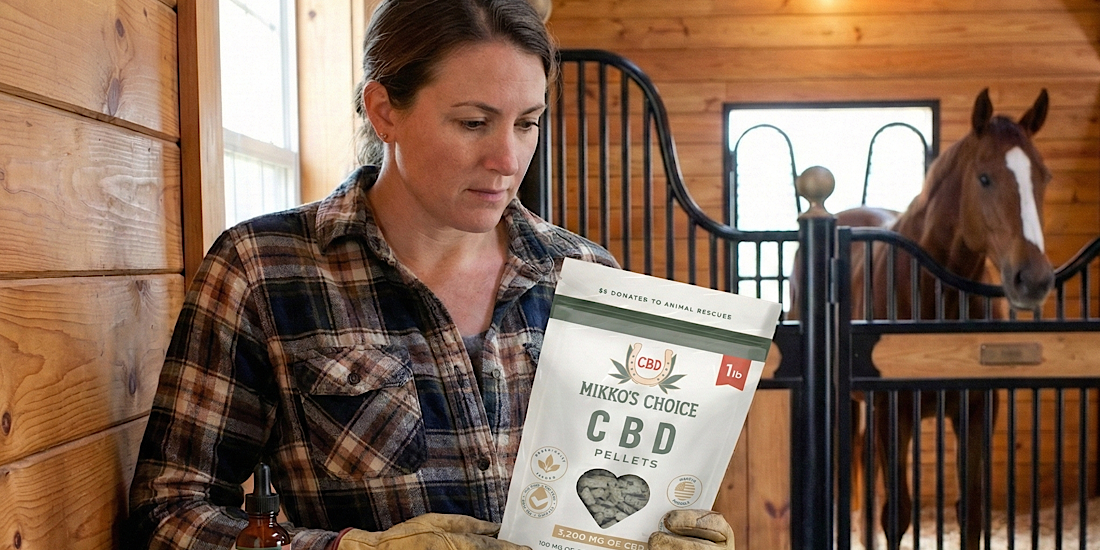
As interest in pet CBD continues to grow, so does the number of products on the market. Tinctures, treats, pellets, capsules, and powders all promise simplicity and quality—but the reality is that CBD labels can be confusing, even for experienced pet owners. Terms like “hemp extract,” “full spectrum,” “milligrams,” and “third-party tested” appear frequently, yet they’re not always explained clearly or used consistently.
At Mikko’s Choice, one of the most common concerns we hear from pet parents is not whether to explore CBD, but how to shop responsibly. They want to avoid low-quality products, understand what they’re actually buying, and reduce risk—especially when it comes to their pets.
This guide is designed to help pet owners read CBD labels with confidence. It takes an educational, risk-aware approach, explaining what matters, what doesn’t, and where common misunderstandings arise. No medical claims are made, and this information is not a substitute for veterinary advice. Instead, it’s a practical tool for informed decision-making.
Why CBD Labels Matter More for Pets Than People
Pets can be more sensitive to changes in diet and supplementation than humans. A product that seems harmless on paper can cause issues if it’s improperly formulated, mislabeled, or contains unnecessary additives.
Unlike prescription medications, CBD products for pets are regulated as supplements. This means the responsibility falls heavily on the consumer to evaluate quality, transparency, and safety. Labels are the first—and often only—window into what’s actually inside the product.
Reading a CBD label carefully isn’t about being overly cautious. It’s about reducing avoidable risk and choosing products that align with responsible pet care.
Start With the Basics: What the Product Is For
One of the first things to look for on a CBD label is intended use. Reputable products clearly state whether they are formulated for:
- Pets (and which species)
- Humans
Pet owners should avoid using CBD products labeled only for humans unless a veterinarian has explicitly approved them. Human products may contain ingredients, concentrations, or flavorings that are not appropriate for animals.
A pet-specific CBD label should clearly identify:
- “For pets” or “For cats/dogs”
- Species-specific guidance, when applicable
- It is a bonus if the product is labeled as “human grade”
If the label is vague about intended use, that’s a red flag.
Understanding “CBD Content” vs. “Hemp Content”
One of the most common sources of confusion is how CBD content is listed.
Some labels clearly state “X mg of CBD,” while others reference “hemp extract” or “hemp oil” without specifying CBD levels. These terms are not interchangeable.
CBD content refers to the actual amount of cannabidiol in the product. Hemp oil or hemp seed oil, on the other hand, may contain little to no CBD at all.
A transparent label should clearly state:
- Total CBD content in milligrams (mg) in the entire product
- Whether that amount refers to the entire bottle or a single serving
- How many mg are in a serving
If a product does not specify CBD content, pet owners cannot accurately assess potency or dosing considerations.
Milligrams Matter—but Context Matters More
Seeing a large milligram number on a label can feel reassuring, but higher numbers do not automatically mean better quality or suitability for pets. Labels that include per-drop or per-serving information make responsible use far easier.
Risk-aware shopping means understanding:
- Total CBD per container
- CBD per serving
- Whether the concentration aligns with pet-specific use
To figure out how much CBD is in a tincture, divide the total mgs in the container by the volume. For example, Mikko’s Choice tincture has 5,000 mg in the 60 ml bottle. 5,000/60 = 83, which is the mg per 1 ml or 1 dropper.
Carrier Oils and Ingredient Lists
CBD is best absorbed with a fat and therefore needs a carrier oil. The chosen oil plays an important role in the formulation.
Common carrier oils include:
- MCT oil (from coconut)
- Hemp seed oil
- Olive Oil
For pets, simpler ingredient lists are usually better. Labels should clearly list every ingredient, not just the active compound.
Pet owners should be cautious of products that include:
- Artificial flavors or sweeteners
- Essential oils not labeled as pet-safe
- Vague “proprietary blends”
If you can’t easily understand what’s in the product, that uncertainty increases risk.
Full Spectrum, Broad Spectrum, and Isolate—What Those Terms Mean
CBD labels often include terms like “full spectrum,” “broad spectrum,” or “CBD isolate.” These terms describe how the CBD was extracted and what other compounds may be present.
- Full-spectrum products contain CBD along with other naturally occurring hemp compounds, including trace amounts of THC within legal limits.
- Broad-spectrum products contain CBD and other hemp compounds but typically remove THC.
- CBD isolate contains only cannabidiol, with no other cannabinoids.
For pets, many owners prefer products with minimal complexity. Labels should clearly state which type of extract is used so pet parents can make informed choices and discuss options with a veterinarian if needed.
THC Content and Why It Matters
One of the most important safety considerations for pets is THC content. While hemp-derived CBD products are legally required to contain less than 0.3% THC, even trace amounts matter when it comes to animals.
A responsible CBD label should indicate:
- THC content or confirmation of compliance
- Lab testing that verifies THC levels
Products that do not address THC at all—or avoid the topic entirely—should be approached with caution.
Third-Party Lab Testing: How to Read a COA
Third-party lab testing is one of the strongest indicators of a trustworthy CBD product. These tests are conducted by independent laboratories and result in a Certificate of Analysis (COA).
A COA typically includes:
- CBD concentration
- THC concentration
- Screening for pesticides, heavy metals, molds, and solvents
Pet owners don’t need to become chemists, but they should look for consistency between the label and the lab report. If the label says 300 mg of CBD, the COA should reflect that amount within a reasonable margin.
A brand that makes lab results easy to find demonstrates transparency and accountability.
Batch Numbers and Traceability
Some CBD labels include batch or lot numbers. While this detail may seem minor, it signals a higher level of quality control.
Batch numbers allow products to be traced back to specific production runs. This matters if there is ever a quality issue, recall, or question about consistency.
While not every product includes this information, its presence is generally a positive sign.
Serving Size vs. Dosing Claims
CBD labels for pets often include serving size suggestions. These should be framed conservatively and clearly.
Risk-aware labels avoid:
- Medical claims
- Promises of specific outcomes
- Language suggesting diagnosis or treatment
Instead, they focus on general use guidance and encourage consultation with a veterinarian. If a label claims to “treat anxiety,” “cure pain,” or “fix behavior,” that is a compliance red flag.
Marketing Language vs. Label Facts
It’s important to separate marketing language from label facts. Words like “premium,” “natural,” or “holistic” may sound appealing, but they are not regulated terms.
What matters more are:
- Clear ingredient lists
- Verified lab testing
- Honest, specific labeling
Pet owners should rely on factual information rather than emotional language when evaluating CBD products.
Why Pet-Specific Labels Are Safer
Using CBD products designed specifically for pets reduces risk. Pet-specific labels account for:
- Appropriate concentrations
- Simpler ingredient profiles
- Clear usage guidance
Human CBD products may include added flavors, or ingredients that are not suitable for animals.
When in doubt, pet-specific labeling is the safer starting point.
Common Label Red Flags to Watch For
Risk-aware pet owners often avoid products that:
- Do not list CBD content in milligrams
- Hide ingredient details
- Lack of third-party lab testing
- Make medical or behavioral claims
- Are unclear about THC content
- Manufactured outside of the US
These red flags don’t automatically mean a product is unsafe, but they do increase uncertainty.
Why Compliance Matters for Pet CBD Brands
Compliance-focused labeling protects both consumers and pets. Brands that follow current regulatory expectations tend to prioritize transparency, testing, and education over aggressive sales tactics.
This approach reduces misinformation and helps pet owners make decisions based on facts rather than fear or hype.
How Mikko’s Choice Approaches CBD Label Transparency
At Mikko’s Choice, label clarity and education are treated as part of responsible pet care. Products are presented with straightforward information, accessible lab testing, and language that avoids claims or guarantees.
The goal is not to persuade every pet owner to use CBD, but to ensure that those who are exploring it can do so with confidence and clarity.
Frequently Asked Questions
Why do some CBD labels list “hemp extract” instead of CBD?
“Hemp extract” is a broad term and does not always indicate CBD content. Look for specific milligram listings.
Are lab reports really necessary?
Yes. Third-party lab testing verifies potency and safety.
Is higher CBD always better for pets?
Yes. Formulations with higher CBD mgs in the entire product offer stronger single doses and the ability to fluctuate the dose better.
Can I trust online reviews instead of labels?
Reviews can be helpful, but should never replace label and lab verification.
Should I ask my vet before using CBD?
Yes. Veterinary input is strongly recommended.
Reading CBD labels is one of the most important skills pet owners can develop when navigating the growing CBD market. Labels are not just packaging—they are a risk management tool. Understanding what they say, what they don’t say, and how to verify their claims helps protect pets from unnecessary exposure and confusion.
By focusing on transparency, lab testing, ingredient clarity, and compliance, pet owners can shop with confidence—even in a crowded marketplace. Whether or not CBD becomes part of your pet’s routine, knowing how to read labels empowers safer, more informed choices.
For pet owners who value education over hype, Mikko’s Choice remains committed to supporting clear, responsible conversations about pet CBD—every step of the way.